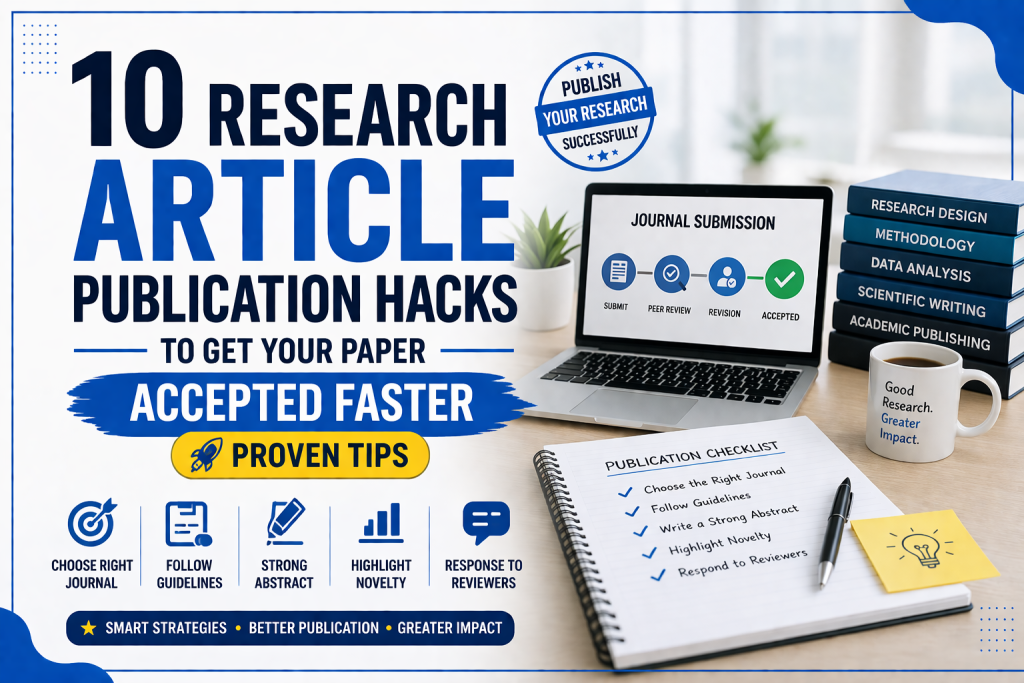
Learn powerful research article publication hacks to avoid rejection, choose the right journal, and get your paper published faster.
Introduction
Publishing a research article is a major milestone for students, researchers, and academics. However, many face rejection due to poor writing, wrong journal selection, or lack of understanding of the publication process.
The good news? With the right strategies, you can significantly increase your chances of acceptance.
In this blog, we’ll explore powerful research article publication hacks that will help you publish faster and smarter.
1. Choose the Right Journal First
One of the biggest mistakes is writing a paper before selecting a journal.
👉 Always check:
- Scope of the journal
- Impact factor
- Acceptance rate
💡 Hack: Match your research topic with the journal’s scope to avoid instant rejection.
2. Follow Author Guidelines Strictly
Every journal has specific formatting rules. Ignoring them leads to desk rejection.
✔ Pay attention to:
- Word count
- Referencing style
- Figure format
💡 This simple step can dramatically improve acceptance chances.
3. Write a Strong Abstract
Your abstract is the first thing editors and reviewers read.
👉 Include:
- Problem statement
- Methods
- Key results
- Conclusion
💡 Think of it as your research “sales pitch.”
4. Focus on Clear and Simple Writing
Avoid overly complex language.
✔ Use short sentences
✔ Avoid jargon where possible
💡 Clarity always beats complexity in academic writing.
5. Highlight Novelty and Contribution
Editors look for originality.
👉 Clearly explain:
- What is new in your research
- Why it matters
💡 If your contribution is unclear, your paper will likely be rejected.
6. Use Proper Data Presentation
Good visuals improve understanding.
✔ Use:
- Tables
- Graphs
- Figures
💡 Make sure all visuals are labeled and referenced in the text.
7. Cite Relevant and Recent Studies
Strong referencing shows you understand the field.
👉 Include:
- Recent studies (last 5 years)
- High-quality journal articles
💡 Avoid outdated or irrelevant citations.
8. Avoid Plagiarism at All Costs
Plagiarism is a major reason for rejection.
✔ Always paraphrase properly
✔ Use plagiarism-check tools
💡 Maintain originality in your work.
9. Write a Professional Cover Letter
Many students ignore this step—but it matters.
👉 Include:
- Brief introduction
- Importance of your study
- Why it fits the journal
💡 A good cover letter creates a strong first impression.
10. Respond to Reviewers Smartly
If your paper gets revisions, don’t panic.
✔ Address each comment carefully
✔ Be polite and professional
💡 Proper revision can turn rejection into acceptance.
Frequently Asked Questions (FAQs)
How long does it take to publish a research article?
It can take anywhere from a few weeks to several months depending on the journal.
Why do research papers get rejected?
Common reasons include poor methodology, lack of novelty, and not following journal guidelines.
Can students publish research articles?
Yes, students can publish papers in national and international journals.
Conclusion
Publishing a research article may seem difficult, but with the right approach, it becomes manageable. By applying these research publication hacks, you can improve your chances of acceptance and build a strong academic profile.
Consistency, clarity, and strategy are the keys to successful publication.